Posted On: May 28, 2026
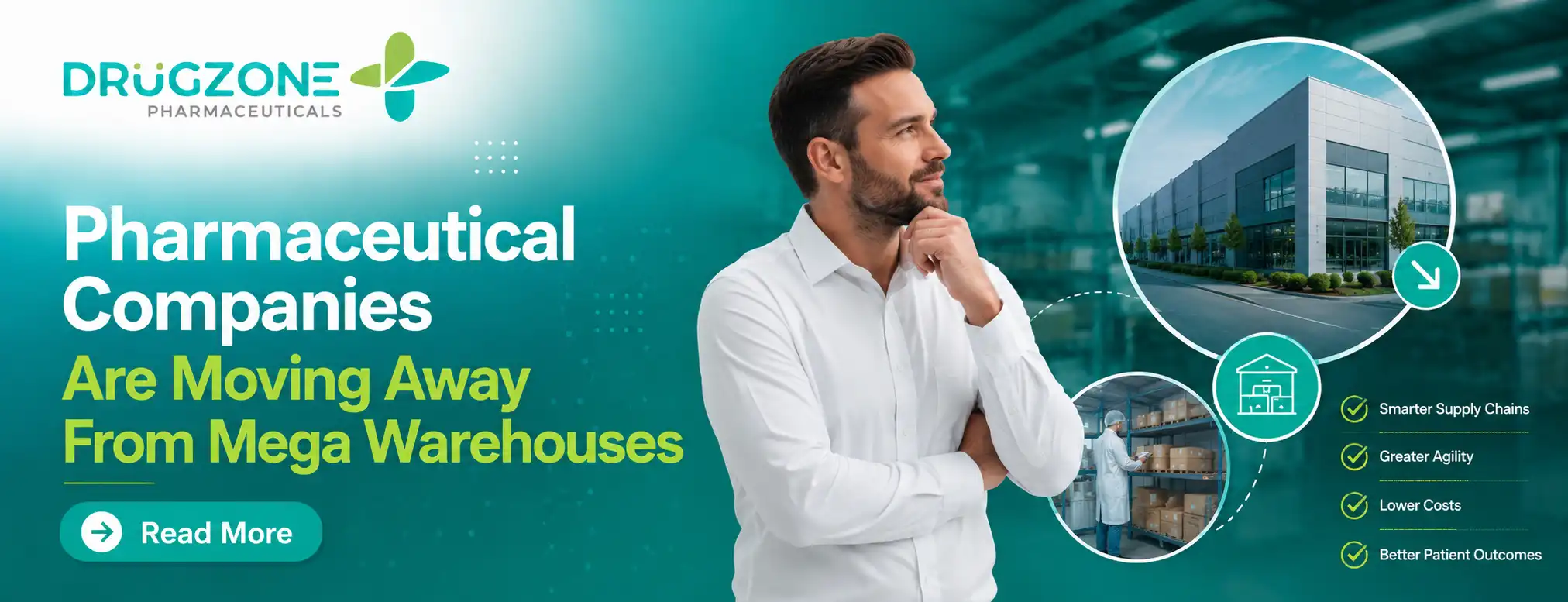
Why Pharmaceutical Companies Are Moving Away From Mega Warehouses
For many years, mega warehouses were considered the backbone of pharmaceutical distribution. Large centralized facilities helped companies store massive inventory volumes and manage nationwide distribution from a single location. However, in 2026, the pharmaceutical industry is gradually shifting away from this model.
Today, pharmaceutical companies are adopting smaller, strategically located distribution centers to improve speed, reduce risks, and maintain supply chain flexibility. This shift is changing how manufacturers, distributors, and healthcare providers manage pharmaceutical logistics.
This blog explains why pharmaceutical companies are moving away from mega warehouses and what this trend means for the future of the industry.
Understanding the Mega Warehouse Model
Mega warehouses are extremely large centralized storage facilities designed to:
- Store bulk inventory
- Serve large geographic regions
- Consolidate supply chain operations
- Reduce operational duplication
This model offered advantages such as:
- Lower storage costs per unit
- Centralized inventory management
- Simplified operational control
However, changes in market demands and regulatory expectations have exposed several limitations.
Growing Demand for Faster Deliveries
One of the biggest reasons for this shift is the increasing need for faster pharmaceutical deliveries.
Healthcare providers and pharmacies now expect:
- Shorter delivery times
- Better inventory availability
- Quick response to urgent orders
A single centralized warehouse often struggles to meet these expectations efficiently, especially across large regions.
By using multiple smaller distribution centers, companies can reduce transportation time and improve order fulfillment speed.
Reduced Risk of Supply Chain Disruptions
Large centralized warehouses create a major operational risk. If a mega warehouse experiences disruptions such as:
- Natural disasters
- Power failures
- Regulatory shutdowns
- Labor shortages
- Transportation delays
the entire supply chain can be affected.
Distributed warehousing helps reduce dependency on one facility and improves business continuity.
For businesses involved in wholesale pharma, reducing operational risk has become a major priority.
Better Cold Chain Management
Modern pharmaceutical products, especially biologics and specialty medications, often require strict temperature control.
Managing cold chain products in mega warehouses can become difficult due to:
- Large storage volumes
- Complex handling processes
- Increased movement within facilities
Smaller regional facilities allow for:
- Better monitoring
- Faster handling
- Improved temperature consistency
- Reduced transit time
This improves product safety and compliance.
Increased Focus on Regional Distribution
Pharmaceutical companies are now prioritizing regional supply chain models.
Regional distribution centers help companies:
- Respond faster to local demand
- Reduce shipping costs
- Improve inventory planning
- Maintain stronger customer relationships
This approach is especially useful during sudden demand spikes or emergency situations.
Changing Inventory Management Strategies
Companies are no longer focused only on storing massive inventory quantities in one location.
Instead, they are adopting:
- Demand-based inventory planning
- Real-time stock visibility
- Decentralized inventory systems
These strategies help reduce:
- Overstocking
- Expired products
- Inventory waste
For a drug wholesaler, inventory accuracy and flexibility are essential for maintaining efficient operations.
Regulatory and Compliance Pressures
Pharmaceutical supply chains are subject to strict regulations enforced by the U.S. Food and Drug Administration and other authorities.
Companies must ensure:
- Product traceability
- Proper storage conditions
- Accurate documentation
- Faster product recalls when necessary
Managing compliance across a massive centralized warehouse can be challenging, especially with growing product complexity.
Smaller facilities often provide better operational control and easier monitoring.
Rising Transportation Costs
Transportation expenses continue to increase due to:
- Fuel price fluctuations
- Shipping delays
- Increased logistics demand
Shipping products long distances from one central location adds to operational costs.
Regional warehouses help reduce:
- Delivery distances
- Transportation expenses
- Transit-related risks
This improves overall supply chain efficiency.
Greater Need for Supply Chain Flexibility
The pharmaceutical market changes rapidly due to:
- Demand fluctuations
- Product shortages
- Regulatory updates
- Public health emergencies
Mega warehouses are often less adaptable during sudden changes.
Smaller distribution networks allow companies to:
- Shift inventory quickly
- Adjust supply routes
- Respond faster to market conditions
This flexibility has become increasingly important in recent years.
Technology Supporting Decentralized Warehousing
Advancements in warehouse technology now make decentralized operations easier to manage.
Companies are using:
- Real-time inventory tracking
- Automated warehouse systems
- Barcode and serialization tools
- Integrated logistics platforms
These systems help maintain visibility and coordination across multiple facilities.
For businesses in wholesale pharma, technology supports better inventory management and operational efficiency across regional networks.
Impact on Customer Service
Moving away from mega warehouses also improves customer experience.
Benefits include:
- Faster deliveries
- Better product availability
- Reduced order errors
- Improved communication with local distribution teams
Healthcare providers increasingly value reliability and responsiveness from their supply chain partners.
Challenges of the New Distribution Model
While decentralized warehousing offers many advantages, companies still face challenges such as:
- Managing multiple facilities
- Maintaining inventory consistency
- Higher setup costs for regional centers
- Coordinating logistics across locations
However, many pharmaceutical companies believe the long-term benefits outweigh these operational complexities.
Future of Pharmaceutical Warehousing
The future of pharmaceutical logistics will likely focus on:
- Smaller regional hubs
- Faster distribution networks
- Improved cold chain systems
- Greater automation
- Stronger inventory visibility
Companies that prioritize flexibility, compliance, and efficient logistics will be better prepared for future supply chain demands.
Conclusion
Pharmaceutical companies are moving away from mega warehouses to improve speed, flexibility, and supply chain reliability. Smaller regional distribution centers help reduce risks, improve inventory control, and support faster deliveries while maintaining compliance standards.
Businesses working with experienced wholesale pharma providers and reliable drug wholesaler networks are better positioned to adapt to these changing distribution models.
Drugzone focuses on maintaining efficient distribution practices, proper product handling, and compliance-driven operations. Their commitment to quality and operational reliability helps support safer and more efficient pharmaceutical supply chains across healthcare networks.
FAQs
1. Why are pharmaceutical companies reducing reliance on mega warehouses?
Companies are moving toward regional distribution models to improve delivery speed, reduce risks, and increase supply chain flexibility.
2. How do smaller warehouses improve pharmaceutical distribution?
Smaller facilities help reduce transit times, improve inventory management, and provide better operational control.
3. What role does technology play in decentralized warehousing?
Technology helps manage inventory visibility, automate processes, and coordinate operations across multiple warehouse locations.
To understand how specialized supply chains are evolving alongside modern distribution models, read our blog on Oncology Drug Distribution Trends in 2026
Article Author

Steve Thomas
Operations and Compliance
Working in Operations and Compliance at Drugzone Pharmaceuticals Inc. ,I manage Regulatory Strategy, Operations Management, Business Strategy, and many more. I also have experience in Project management, budgeting, and team leadership.
Tags
Latest Posts
-

How the Medicare drug price negotiation of 2026 is affecting LTC pharmacy supply and reimbursement
-

Same-day and next-day drug delivery: what independent pharmacies should expect from distributors
-

E-pharmacy growth and what it means for traditional pharmaceutical distributors in the USA
-
Schedule II vs Schedule III drugs: what distributors need to know about DEA rules
-

PBM Reform 2026: How the New Rebate Pass-Through Law Affects Distributors
Similar Posts
-
How the Medicare drug price negotiation of 2026 is affecting LTC pharmacy supply and reimbursement
-
Same-day and next-day drug delivery: what independent pharmacies should expect from distributors
-
E-pharmacy growth and what it means for traditional pharmaceutical distributors in the USA
-
Schedule II vs Schedule III drugs: what distributors need to know about DEA rules
-

Understanding the Penalties: What Happens if You Fail a DSCSA Audit in 2026?